Solar battery brands
Which solar battery brands do we offer?
Our preferred battery brands are Solis with Weco, and Sigenergy. Those are the systems we recommend, and the ones we fit most often. We can also look into other brands for you, including EcoFlow, Huawei, Sungrow and Dyness, if you would like something specific. You'll find our preferred systems in our preferred brands below, and the rest under other brands on request.
Battery capacity is measured in kilowatt-hours (kWh), which shows how much electricity a battery can store - for example, 1 kWh is the amount of energy used by a 1,000-watt appliance running for one hour. As a rough guide, a typical home in Ireland uses around 12 kWh per day.
The figures further down this page are mostly in kilowatts (kW). Those measure how quickly power flows, not how much is stored. The easiest way to keep them apart: kWh is the size of the tank, kW is how fast the tap runs.
Below is a full breakdown of what we offer, with links to datasheets and everything you need to know about performance, compatibility and capacity. We will gladly recommend the best battery brand for your specific needs and circumstances, so there is no need for you to look into all the details yourself unless you particularly wish to. This section is here for those of a curious & technical nature who would like to investigate all the options with full technical details.
What is a Battery Management System (BMS)?
Think of the BMS like a computer that sits on the battery, to manage it as a system. It monitors how much charge the battery has, controls how power flows in and out, and protects the system.
In some systems, such as Huawei and Sungrow, the BMS is a separate unit that sits alongside the batteries. In others, it is built into the battery itself. The BMS matters most when several batteries are connected together.
Our preferred battery brands
These are the two systems we recommend, and the ones we fit most often.
Solis inverter with Weco batteries
This is our standard pairing, and the best value option. A Solis hybrid inverter, which is an inverter that handles both solar panels and a battery, is paired with Weco battery units. Each unit holds 5.3kWh, and the batteries are modular, which means you can start with one and add more later to build up the storage you need.
Weco batteries include built-in heating, which keeps the cells warm so the battery keeps charging properly on cold winter mornings. They also have a built-in fire suppression system.
- Best value option, with the lowest cost per unit of storage.
- Modular: start with one 5.3kWh unit and add more as you need.
- 10-year manufacturer's warranty, with 100% depth of discharge, so you can use all of the stored energy.
- Must be installed indoors - outdoor installation not supported.
Datasheet: Weco 5.3kWh datasheet

Sigenergy
Sigenergy is our premium option. It is an all-in-one system, which means the inverter, the battery, an EV charger and a backup gateway all come from the same manufacturer and are managed in a single app.
Each battery module holds 10kWh, and you can stack up to six of them for 60kWh of storage. Every module has its own built-in optimiser, so if you add a brand new battery several years later it still works at full capacity alongside the older units.
- All-in-one system: inverter, battery, EV charger and backup gateway, all in one app.
- Each module holds 10kWh, up to six modules (60kWh in total).
- New batteries can be added later without being held back by the older ones.
- Irish-based technical support team.
- 10-year manufacturer's warranty.
Other brands on request
We can also look into other brands for you. If you would like a specific make or model, get in touch and we will check whether we can supply and install it for your system. The brands we are asked about most often are covered below.
Sungrow battery
Sungrow batteries are a solid, high-efficiency option, but they must be installed with a Sungrow inverter. The battery and inverter always stay within the same system family. These come with a 10-year manufacturer's warranty and a full 100% depth of discharge, meaning you can use all the battery's stored energy without limiting lifespan.
- Battery modules come in 3.2kWh blocks (you must install at least two for a 6.4kWh minimum).
- The maximum storage we can fit for this system is 19.2kWh.
- New 5kWh modules now available - install up to four together (20kWh).
- Requires a separate BMS (battery management system) module.
- Can be installed outdoors.
Please note: The older model Sungrow SBR3.2 HV batteries are discontinued. HV simply means high voltage. This means you can't buy additional batteries for systems with this model. The new Sungrow battery model is the SBS050, a 5kWh high-voltage battery that uses lithium iron phosphate (LFP) cells. LFP is one of the most common battery chemistries in home solar, and it is known for being safe and long-lasting.
Old model datasheet: Sungrow SBR3.2 3.2kWh
New model datasheet: Sungrow SBS050 5kWh

EcoFlow battery
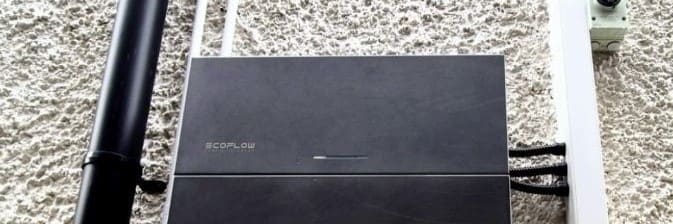
EcoFlow batteries are a newer option with smart features and excellent cold-weather performance. These must be paired with an EcoFlow inverter, they're designed as a single ecosystem and do not mix with other brands. EcoFlow offers a 15-year warranty and a 95% depth of discharge.
- Each battery holds 5.1kWh, you can install up to three (15.3kWh max)
- Discharge and charge rates scale with each unit - one battery can send up to 3.3kW out (to your home and the grid) and take in up to 2.5kW while it charges
- Can be installed outdoors - this battery also includes integrated heat pads to keep it at the right temperature, so it charges and discharges reliably even in cold weather.
Datasheet: EcoFlow PowerOcean 5kWh

Weco battery
Weco batteries are well-known for their flexibility and long-term reliability. They're compatible with a range of inverters, and we most often pair them with the Solis hybrid, which is an inverter that handles both solar panels and a battery. These are modular, which means you can add more units to build up the storage you need. They are efficient, and they are expected to keep 70% of their original capacity even after the number of charge cycles covered by the warranty (one cycle is a full charge followed by a full discharge). Their warranty is set at 10 years, with a 100% depth of discharge.
- Each unit holds 5.3kWh, up to 3 installed as standard, or up to 15 for larger systems.
- Delivers up to 5kW of usable power, which suits homes with heavy electrical demand, such as those with a heat pump or electric heating.
- Expected to retain 70% capacity after 10 years of daily use.
- Must be installed indoors - outdoor installation not supported.
Datasheet: Weco 5.3kWh datasheet
Dyness battery
Dyness offers a good balance of price to quality, and flexible installation options. The latest model we use is the H5B, and we still use the Dyness DL5.0C. Each unit holds 5.12kWh, and it can be expanded up to 10 units. Depth of discharge is 90%. These are suitable for outdoor use and ideal if you're after scalability without a high cost.
- Each battery provides 5.12kWh.
- Recommended charge/discharge at half capacity, so about 2.5kW.
- Expandable up to 10 units (over 50kWh total).
- Can be installed outdoors.
HSB datasheet: Dyness H5B
DL5.0C datasheet: Dyness DL5.0C

Huawei battery
Huawei's Luna 2000 battery series is smart and durable, and it can grow with you. It requires a Huawei inverter and a separate controller, called a Battery Management System (BMS). You can start with one unit and add more later, or go larger from the start. Units can be stacked on top of each other and wired so they work together as one bigger battery. The warranty is 10 years, and depth of discharge is 100%.
- Older Luna 2000 model: each unit stores 5kWh, and you can stack up to 3 of them, for 15kWh in total.
- A single 5kWh unit can send out up to 2.5kW. Once you have two units (10kWh), that rises to 5kW.
- Newer version: Luna 2000 7S1 - each unit stores 6.9kWh, and you can stack up to 3 for a total of 20.7kWh.
- Max charge and discharge rate for the Luna 2000 7S1 setup is 3.5kW.
- For larger systems you can have several stacks, for example four stacks of three units. Each stack needs its own BMS.
- Can be installed outdoors.
New model datasheet: Luna 2000 7S1
Need a hand?
Get in touch with your installation team at PureVolt.ie and we can talk you through which battery brands suit your system, and why.
You might also find these guides useful:
- Solar battery pros & cons — whether a battery is right for you.
- How to add a battery — retrofitting and expanding storage.
- Battery charging and discharging explained — understanding normal battery behaviour.