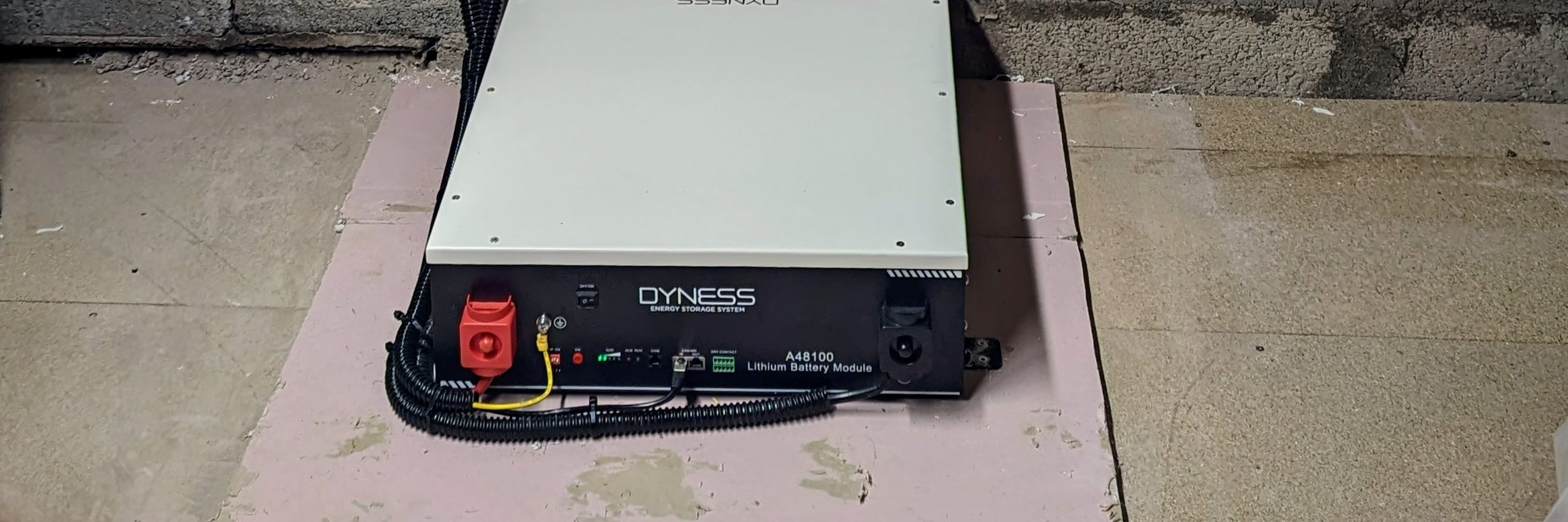
Battery percentage jumping up and down
Why is my battery percentage jumping up and down?
Seeing your battery percentage jump around in your solar app? If you have two or more batteries, sudden drops or unexplained jumps usually mean the batteries have drifted out of step with each other.
It can look alarming, but in most cases nothing is broken and no power has been lost. The batteries simply need to be put back in step, which is normally a quick job for your installer. This page explains what is happening and what we will do to put it right.
How to tell if this is your issue
Check for these signs:
This behaviour is most common on systems with two or more batteries working together as one “bigger battery”.
The percentage drops sharply when it reaches roughly 30%, for example from 30% down to around 10% in one step.
The percentage can also jump up near the top of the charge, for example from 90% straight to 100%.
The change happens within a single 5-minute window in your monitoring data, which is not normal battery behaviour.
If these signs sound familiar, read on. If you are not sure whether this matches your system, please contact us and we will help you confirm before anything is done.
Why does this happen?
When you have two or more batteries, they work together as a team and the system shows you one combined charge level. Each battery also has its own small controller, called a Battery Management System (BMS), which keeps it safe and reports how full it is. For the system to show a single, sensible percentage, the batteries need to stay closely in step with each other. When they drift apart, the system can lose track of one of them.
- At low charge. When your batteries run down to roughly 30%, one battery can reach its own safety cut-off just before the other and switch itself off.
- The system loses sight of it. Once a battery switches off, the system can no longer talk to it, so it only sees the remaining battery.
- The percentage drops. The reading suddenly falls to what the remaining battery shows, for example around 10%.
- It can also jump up. The same drift can push the percentage upward when the batteries are near full.
The important thing to know is that your battery has not suddenly lost charge. A sudden drop or jump in the number happens because the system has lost track of one of the batteries, not because the energy has disappeared.
Is my battery damaged?
In most cases, no. Nothing is broken and no battery has lost any real capacity. Your batteries have simply drifted out of step with each other and need to be re-synced.
The fix involves charging each battery to 100% on its own, checking that they are holding the same amount, then reconnecting them so the system sees both together again. This uses installer controls and involves switching the batteries off and disconnecting them, so it is not something you should try yourself.
Never switch off, disconnect, or open your battery units yourself. Batteries store a large amount of high-voltage DC electricity, the same type your panels use, and must only be handled by a qualified engineer. If you are not sure what is happening, contact us rather than trying anything that could put your safety at risk or damage your equipment.
When it is a hardware issue
In rare cases, a part on the side of one of the batteries fails and stops the batteries talking to each other. When that happens, rebalancing on its own will not fix it. The faulty part has to be replaced first.
These signs point to a hardware fault rather than a simple balancing issue:
- The jumping comes back, or never improves, after the balancing procedure.
- The batteries keep losing touch with each other, or lose touch for good.
If you see these signs, we can arrange to replace the faulty part before rebalancing the batteries. We handle the replacement for you and return the faulty part to our supplier for assessment.
What happens next
There is nothing you need to do to the system itself, and we do not recommend attempting the balancing procedure at home. Here is what happens once we are involved:
- We confirm the issue. From your monitoring data we can see whether the readings are jumping within a single 5-minute window.
- We arrange a visit. One of our engineers will attend to rebalance your batteries. In most cases this is a quick job once we are on site.
- We balance the batteries. We charge each battery to 100% on its own, check they are closely matched, then reconnect and sync them together.
- Your system returns to normal. The battery percentage starts reporting correctly and stays stable, with no more sudden changes.
How long does it take?
We can normally arrange a visit within a few working days, depending on our schedule. The balancing itself is usually completed in around 30–60 minutes once our engineer is on site.
Need a hand?
If your battery percentage is jumping up and down and you have two or more batteries, get in touch with your installation team at PureVolt.ie. It helps if you can tell us:
- How many batteries you have.
- What the percentage is doing, for example dropping sharply at around 30% or jumping up near full.
- When you first noticed it, and whether it happens at a particular time of day.
From that we can usually tell whether your batteries just need rebalancing or whether a site visit is needed.
You might also find these guides useful:
- Battery charging and discharging explained, understanding normal battery behaviour.
- Battery appears dead after a power cut, what to do if your battery will not turn on.
- Solis fault codes explained, what each code means and what to check.